



- label News
- favorite 0 likes
The often-quoted “30-minute rule” is not a universal legal permission or prohibition. It is HSE guidance: if a task requires a person to remain on a leaning ladder or stepladder for more than about 30 minutes at a time, alternative equipment should normally be considered. Likewise, UK regulations do not set a blanket 10 kg ladder limit. The work must be light enough to be carried out safely, without excessive force, awkward posture or loss of balance.
For most professional users, the practical starting point is a properly marked BS EN 131 Professional ladder, selected for the task, inspected before use and secured against slipping. But compliance is not created by a label alone. The work environment, user competence, ladder condition, weather, duration and method of use all matter.
This guide explains the UK working at height regulations, when ladders are permitted, what BS EN 131 means, how to carry out a ladder risk assessment and which ladder features to check before buying or using equipment.
Important: This is general information, not legal advice. Requirements can vary with the task and workplace. Always consult the current HSE guidance on working at height and obtain competent advice where the risks are significant.
What are the work at height regulations 2005?
The Work at Height Regulations 2005 are the main UK regulations governing work where a person could fall and suffer personal injury. They apply to construction, maintenance, warehousing, facilities management, decorating, roof access and many other workplaces.
The regulations require work at height to be properly planned, appropriately supervised and carried out by people with the necessary competence. Work equipment must be suitable, stable, strong enough for the intended use and maintained in a safe condition.
The legal duties are based on risk rather than a single height threshold. There is no general rule stating that work becomes “working at height” only above two metres. A fall from a lower level may still cause serious injury, while a person can be exposed to a fall at ground level if there is an opening, fragile surface or other hazard.
Definition: What counts as “Working at height”?
HSE defines working at height as work in any place where, if there were no precautions, a person could fall a distance liable to cause personal injury. This can include:
- climbing a ladder or stepladder;
- working from a platform, scaffold or podium;
- accessing a roof, mezzanine, vehicle or loading area;
- working near an unprotected edge, opening or fragile surface; and
- using equipment where a person could fall during access or egress.
Who do the regulations apply to?
The regulations place duties on employers, the self-employed and anyone who controls work at height, such as a building owner, facilities manager or principal contractor. Workers should follow instructions, use equipment correctly and report defects.
The Hierarchy of controls: Avoid → Prevent → Minimise
The regulations use this hierarchy:
- Avoid work at height where it is reasonably practicable. For example, assemble or clean an item at ground level, or use an extending tool from the ground.
- Prevent a fall when work at height cannot be avoided. This may involve a guardrail, scaffold, tower, podium or suitable mobile elevating work platform (MEWP).
- Minimise the distance and consequences of a fall when the risk cannot be eliminated. Depending on the situation, this may involve additional collective or personal protection and a planned rescue arrangement.
Ladders may be used as access equipment and, in limited circumstances, as a place for short-duration work. They are not automatically the preferred platform.
Can You still use ladders at work in the UK?
Yes. The HSE states that ladders can be used where a risk assessment shows that equipment offering a higher level of fall protection is not justified. This may be because the task is low risk and short duration, or because existing features of the workplace cannot reasonably be altered.
The useful question is: “Is this ladder, in this condition, suitable for this task and location, and can this person use it safely?”
The Short-Duration Guidance
HSE guidance uses 30 minutes as a practical reference point. If a person would need to stay on a leaning ladder or stepladder for more than 30 minutes at a time, alternative equipment should normally be considered. The same guidance makes clear that duration is not the only deciding factor: a short job can still be unsafe, and a risk assessment must come first.
Treat 30 minutes as a trigger to reconsider the equipment, not as a countdown that makes an otherwise dangerous task acceptable.
Light work does not mean a fixed 10 kg limit
HSE refers to light work rather than prescribing a universal weight limit. The frequently repeated 10 kg figure should not be presented as a standalone legal rule. The assessment should consider the total load and how the work is performed, including:
- the user’s body weight and clothing;
- tools, materials and personal protective equipment;
- whether the person can maintain a secure handhold;
- pushing, pulling, drilling or other forces;
- twisting, stretching and overreaching;
- the need to carry items while climbing; and
- whether the ladder remains stable when the task is performed.
If a worker needs both hands for sustained work, applies significant force or carries a bulky load, a platform or other work equipment will often be more appropriate.
When a ladder is not the right choice
A ladder is unlikely to be a suitable choice where:
- the task is strenuous, heavy or forceful;
- the worker must work sideways or reach beyond the ladder’s stiles;
- the surface is uneven, slippery, fragile or exposed to strong wind;
- the ladder cannot be secured against slipping;
- the user needs to stand on an unsafe step or the top cap;
- materials are too large or heavy to carry safely;
- there is vehicle, plant, pedestrian or door traffic nearby;
- the work is prolonged, repetitive or fatiguing; or
- a scaffold, podium, tower or MEWP would provide materially better protection.
In these situations, consider a platform step, podium, mobile tower, scaffold or MEWP. The right alternative depends on height, access, ground conditions, reach, duration and the need to move while working.
When can you use a ladder at work?
| Condition | What good practice requires |
|---|---|
| Risk | The task has been assessed and is low risk enough for a ladder. |
| Equipment selection | A more protective option is not reasonably justified, or the workplace has features that cannot reasonably be changed. |
| Duration | The task is short; more than about 30 minutes in one position is a prompt to use alternative equipment. |
| Work type | The work is light and does not require excessive force, awkward posture or sustained two-handed activity. |
| Stability | The ladder stands level on a suitable surface and is secured against slipping where reasonably practicable. |
| User | The person is competent, trained or directly supervised while being trained. |
| Condition | Pre-use checks show no defect that could affect safe use. |
BS EN 131: The Ladder safety standard explained
BS EN 131 is the product standard for portable ladders and stepladders. It sets requirements and test methods for design, construction, dimensions, stability and marking. It is an important part of selecting professional equipment, but it does not replace a workplace risk assessment or safe method of use.
Professional and Non-Professional Ladders
The current EN 131 classification uses Professional and Non-Professional categories. The Ladder Association states that Professional ladders are designed for workplace use and greater durability, while Non-Professional ladders are intended for domestic use only and are not suitable for the workplace.
Both categories have a maximum total load of 150 kg. That total includes the user, clothing, protective equipment, tools and materials. It is not a recommendation to work at the maximum load, and it does not make a ladder suitable for every task.
| Feature | EN 131 Professional | EN 131 Non-Professional |
|---|---|---|
| Intended use | Workplace and trade use | Domestic use only |
| Total maximum load | 150 kg, including user and items carried | 150 kg, including user and items carried |
| Main distinction | Designed and tested for greater durability in professional use | Designed for less intensive domestic use |
| Can it be used at home? | Yes | Yes, within its instructions |
| Suitable for a commercial workplace? | Yes, subject to risk assessment and condition | No: it is not intended or suitable for workplace use |
When buying for a business, look for clear Professional classification, the manufacturer’s instructions, traceable product information and a declaration or certificate appropriate to the product. Avoid relying on a vague statement such as “heavy duty” without supporting markings and documentation.
What About the Old Class 1, Class 2 and Class 3 System?
Many tradespeople still refer to the older Class 1, Class 2 and Class 3 ladder system. That system has been replaced for new products by the EN 131 Professional and Non-Professional categories. Existing ladders are not automatically illegal solely because they carry an old class marking, but they must be suitable, maintained and safe for the work. Their history, condition and manufacturer’s instructions should be considered.
| Older description | Current practical comparison | Important qualification |
|---|---|---|
| Class 1, industrial | Broadly comparable to professional use | Do not assume equivalence without checking the individual ladder and its condition. |
| Class 2, trade | Broadly comparable to professional use | The old marking does not remove the need for a current risk assessment. |
| Class 3, domestic | Broadly comparable to non-professional domestic use | Not suitable for workplace use. |
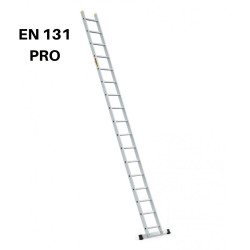
For professional models, see Drabest’s BS EN 131 Professional step ladders, two-section aluminium ladders and three-section aluminium ladders. Always confirm the current product data and instructions before purchase.
What Markings Should You Look For?
Before using or purchasing a ladder, check for:
- the manufacturer’s name or identifiable brand;
- model or product reference;
- EN 131 marking and, for workplace use, Professional classification;
- maximum total load, including the user and materials;
- instructions and warnings in a language the user understands;
- configuration and height information for multi-purpose ladders;
- inspection or batch information where supplied; and
- visible conformity and certification information appropriate to the product.
The marking is only one part of the decision. A compliant ladder can still be unsafe if damaged, incorrectly configured, placed on an unsuitable surface or used beyond its instructions.
Ladder Risk Assessment: A Practical Step-by-Step Guide
A risk assessment should describe the real task, not just state that “a ladder will be used”. The level of detail should be proportionate to the risk, but the assessment should be specific enough to justify the equipment and controls.
1. Describe the Task
Record what needs to be done, where it will happen and how often. Note the working height, access route, work position, tools and materials.
2. Identify Fall and Other Hazards
Consider falls, slips, overreaching, falling objects and manual handling. Check fragile surfaces, openings, edges, electrical conductors, weather, lighting, contamination, uneven ground, doors, vehicles and people below.
3. Consider the User
Check competence, training, physical ability and factors affecting climbing or balance. New or inexperienced workers should be supervised until they can demonstrate safe use. Users should understand the ladder’s configuration, limitations, inspection process and securing method.
4. Select and Position the Equipment
Choose the right type and length. Place it on a firm, level, clean surface and identify how it will be secured before anyone climbs it.
5. Decide Whether an Alternative Is Better
Compare the ladder with a platform step, podium, tower, scaffold or MEWP. Ask whether the alternative provides better fall protection or a more stable working position.
6. Plan Supervision, Exclusion and Rescue
Control the area below the work and plan what will happen if the user is injured or cannot descend. Do not rely on emergency services as the only rescue plan.
Five-Point Ladder Risk Assessment Checklist
Use the following as a prompt, adapting it to the task:
- Task: Is the work low risk, light and short enough for ladder use?
- Place: Is the surface firm and level, and are edges, openings, fragile surfaces, traffic and electrical hazards controlled?
- Equipment: Is the ladder the correct type, length, configuration and Professional category for workplace use?
- Method: Can it be secured, climbed and used while maintaining balance and an appropriate handhold?
- People and emergency: Is the user competent, are others protected from falling objects, and is there a practical rescue plan?
If any answer is no, pause and choose additional controls or alternative equipment before starting.
Ladder Safety Rules: The HSE Essentials
The 1-in-4 Rule and 75-Degree Angle
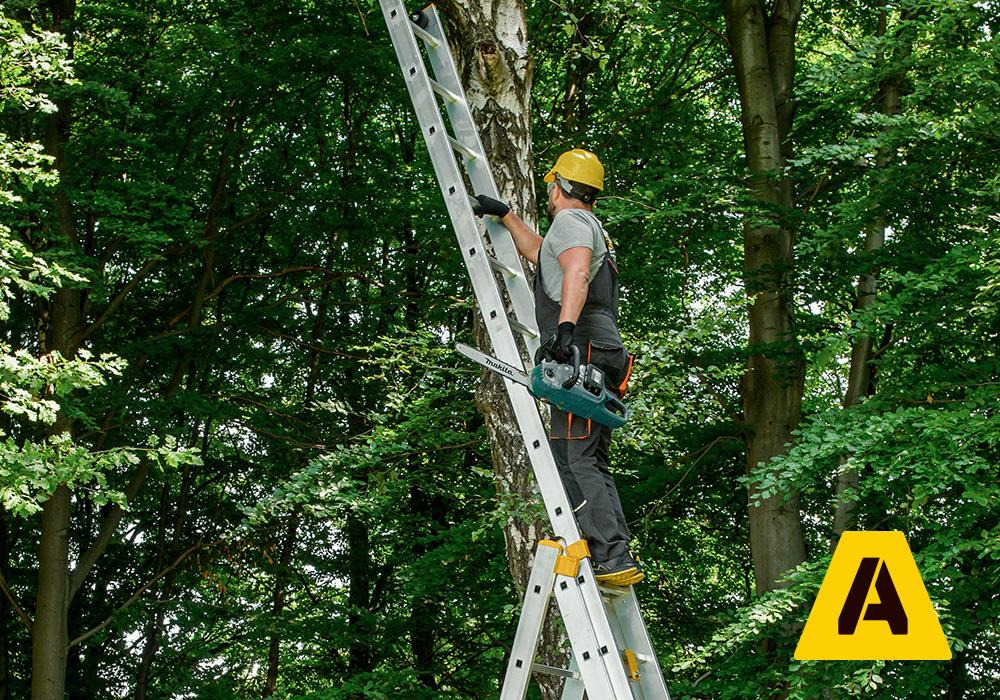
For a leaning ladder, position the base approximately one unit out from the supporting surface for every four units of vertical height to the point of support. This is commonly known as the 1-in-4 rule and produces an angle of about 75 degrees.
The rule is a positioning guide, not a substitute for securing the ladder. It also applies only where the supporting surface is suitable and the ladder manufacturer’s instructions do not specify another arrangement.
Three Points of Contact
When climbing, maintain three points of contact wherever possible: two feet and one hand, or two hands and one foot. Carry small tools in a belt, holster or suitable container so that both hands are available for climbing.
At the work position, do not treat three-point contact as permission to carry out strenuous or forceful work. If both hands must be free for more than a brief, light task, reassess whether a platform or other equipment is needed. On a stepladder, two feet should remain on the same step and the body should be supported by the stepladder when both hands are briefly required.
Pre-Use Inspection: What to Check
Before every use, look for:
- bent, cracked, split or distorted stiles;
- loose, missing, bent or contaminated rungs or steps;
- worn, split or missing feet and end caps;
- loose rivets, bolts, hinges, locks, ropes or guides;
- damaged platforms, braces, spreaders or stabilisers;
- oil, paint, mud, water or other slip hazards;
- illegible safety labels or missing instructions; and
- signs that the ladder has been dropped, overloaded or altered.
Open and lock a stepladder fully. On an extension or combination ladder, check that every locking device has engaged and that the sections are in the permitted configuration. Remove defective equipment from service, label it clearly and report it. Do not improvise repairs or continue using a ladder because the defect appears minor.
Securing the Ladder
The regulations require ladders to be prevented from slipping during use. The preferred approach is to tie the ladder to a suitable point, securing both stiles where appropriate. If tying is not practicable, use a suitable stability device. If that is not possible, secure or wedge the ladder against a suitable structure. Footing should be a last resort and should be avoided where another method is reasonably practicable.
Do not rely solely on rubber feet, a stabiliser bar or another anti-slip feature to replace securing. These features can improve stability, but they do not eliminate the risk of movement on every surface or under every load.
When a ladder is used for access to another level, it should normally extend at least 1 metre above the landing point to provide a secure handhold, unless another safe handhold is available. Keep the landing area clear and ensure the ladder is secured at the top and bottom as appropriate.
Working Position, Weather and Surroundings
Keep your body between the ladder’s stiles and move the ladder instead of leaning sideways. Never place it on boxes, pallets or other improvised platforms.
Keep clear of unsecured doors, vehicles, mobile plant and pedestrians. Do not use a metal ladder near exposed live electrical conductors; control or isolate the electrical hazard and select suitable non-conductive equipment where appropriate. Stop work if weather or lighting makes the equipment unsafe.
Ladder Inspection and Record-Keeping
Pre-Use Checks vs Formal Inspections
A pre-use check is a brief user check before use and after events that could affect condition, such as moving or dropping the ladder.
A more detailed inspection is carried out by a competent person at intervals based on risk and use. The Work at Height Regulations require work equipment exposed to conditions liable to cause deterioration to be inspected at suitable intervals and after exceptional circumstances that could jeopardise safety. There is no universal legal three- or six-month inspection interval for every ladder.
Businesses often use a periodic interval such as three to six months for frequently used trade ladders, but the appropriate frequency depends on intensity of use, transport, environment, contamination, previous damage and the manufacturer’s instructions. High-use construction equipment may need more frequent attention.
Who Is a Competent Person?
A competent person has sufficient training, knowledge and experience to recognise defects and judge whether the ladder remains safe. Competence may be demonstrated through a combination of practical experience, relevant training and understanding of the equipment. A formal certificate is not automatically required for every low-risk ladder inspection, but the person must be genuinely capable of carrying it out.
What Records Should Include
Keep records proportionate to the risk. A useful record can include:
- ladder identification or asset number;
- type, model and location;
- date of inspection and name of inspector;
- condition and defects found;
- action taken, such as repair, quarantine or disposal;
- date for the next planned inspection; and
- confirmation of any restriction communicated to users.
Records do not make an unsafe ladder safe; they show that equipment is managed and defects are acted upon.
Which Ladders Meet UK Workplace Requirements?
The ladder type should follow the task. A BS EN 131 Professional model is generally the appropriate product category for workplace use, but the choice between step ladders, leaning ladders, combination ladders, fibreglass ladders and platforms still depends on the risk assessment.
| Ladder or access type | Workplace status | Typical controls and use |
|---|---|---|
| Professional step ladder | Suitable for workplace use when justified | Firm, level surface; spreaders locked; light, short-duration work; avoid overreaching. |
| Professional leaning or extension ladder | Suitable when justified | Correct 1-in-4 angle; secure against slipping; suitable top support; safe access and landing. |
| Professional combination ladder | Suitable when justified | Use only in a configuration allowed by the manufacturer; lock every section and use supplied stabilisers. |
| Platform step or podium | Often preferable for longer or two-handed tasks | Use where the risk assessment shows that a more stable working platform is appropriate. |
| Fibreglass ladder | Consider where electrical exposure is a risk | Non-conductive equipment does not make work near electricity automatically safe; isolate and control the electrical hazard. |
| EN 131 Non-Professional / domestic ladder | Not intended for workplace use | Keep for domestic use; select Professional equipment for commercial work. |
For professional models, see Drabest’s range of certified equipment.
Step Ladders
Professional step ladders are useful for short, light tasks from a stable standing position. Check that spreaders are fully open and locked, the platform or top cap is used only as instructed, and the user stays within the side rails.
Drabest’s Professional aluminium step ladder range is intended for trade and workplace applications. Check the individual model’s load capacity, step count, dimensions, certificate and instructions before selecting it for a task.
Extension and Leaning Ladders
Extension ladders provide access and reach but usually offer less support for sustained work than a platform. They need a suitable supporting surface, correct angle and effective securing. A longer ladder is not automatically a safer ladder: the height, handling method and consequences of a fall must be assessed.
For examples of professional two-section models, see Drabest’s PRO 2-section aluminium ladders. For higher access requirements, PRO 3-section aluminium ladders offer multiple configurations, but each configuration must be assembled and used exactly as specified.
There is no general maximum height at which a ladder becomes illegal. However, where a ladder rises 9 metres or more above its base, landing areas or rest platforms should be provided at suitable intervals. This requirement does not remove the need to consider safer alternatives.
Combination and Multi-Purpose Ladders
Combination ladders can operate in several approved configurations, but incorrect assembly creates a risk. Before climbing, confirm that:
- the configuration is permitted by the instructions;
- hinges, hooks, locks and braces are fully engaged;
- the ladder is on a firm, level surface;
- the stabiliser is fitted when required; and
- the maximum height and load have not been exceeded.
Platform Steps and Podiums
A platform step or podium can be the better choice where the worker needs a larger standing area, more stability or both hands free for a light task. It is not automatically suitable for every location, but it often provides a more ergonomic working position than a ladder and may reduce overreaching.
Where the assessment identifies a need for a non-conductive option, review Drabest’s fibreglass step ladders. For a more stable standing surface, compare hop-up platforms; ladder accessories may also help with securing and organising equipment, but accessories never replace the manufacturer’s instructions or a risk assessment.
Frequently Asked Questions
Can you use a ladder at work in the UK?
Yes. Ladders are permitted when a risk assessment shows that the work is suitable for a ladder and that a higher level of fall protection is not reasonably justified. The ladder must be suitable, stable, secured where reasonably practicable, inspected and used by a competent person.
What is the legal height for a ladder in the UK?
There is no single maximum height for ladder use. The regulations focus on risk and suitable equipment. Where a ladder rises 9 metres or more above its base, landing areas or rest platforms should be provided at suitable intervals. The greater the height and fall consequence, the stronger the case for a scaffold, tower, podium or MEWP.
Is there a 30-minute legal limit for ladders?
No. HSE uses 30 minutes as guidance for when alternative equipment should normally be considered for staying on a leaning ladder or stepladder. Duration is only one factor; a short task can still be unsafe.
Is there a 10 kg legal limit for ladder work?
No universal 10 kg limit appears in the Work at Height Regulations. The task must be light enough to perform without excessive force, loss of balance or unsafe handling. Assess the combined weight of the user, tools, materials and protective equipment, as well as the way the load is carried.
What is BS EN 131?
BS EN 131 is the standard for portable ladders and stepladders. For workplace use, choose a clearly identified EN 131 Professional ladder. EN 131 does not replace a risk assessment, correct positioning, securing, inspection or training.
Are Class 1 ladders still valid?
An old Class 1 marking does not automatically make an existing ladder illegal. The ladder must still be suitable, maintained, inspected and safe for the particular task. New ladders are generally classified under the EN 131 Professional and Non-Professional system.
Do I need a risk assessment to use a ladder?
Employers and other duty holders must assess the risks of work at height and select suitable equipment. The assessment can be proportionate to the task, but it should justify why ladder use is appropriate and identify controls for the actual work environment.
How often should ladders be inspected?
The user should carry out a pre-use check before every use. A competent person should also carry out more detailed inspections at intervals based on risk, use and the conditions in which the ladder is kept and transported. There is no one interval that applies to every ladder.
What are the five basic ladder safety rules?
Use the correct Professional equipment; check it before use; position a leaning ladder at approximately the 1-in-4 angle; secure it against slipping; and maintain three points of contact. Do not overreach, overload or use a ladder for forceful work.
Do ladders need to be CE marked?
Do not select a ladder solely because it carries a CE mark. Check the product’s current conformity information, EN 131 classification, manufacturer’s instructions, traceability and intended use. The marking requirements that apply can depend on the product and legislation in force, so manufacturers and duty holders should verify current guidance for the specific equipment.
Summary: Using Ladders Legally and Safely in the UK
The UK working at height regulations do not ban ladders and do not impose one universal maximum height, 30-minute limit or 10 kg limit. They require duty holders to plan work, assess risk, use competent people and select equipment that prevents or minimises falls.
For professional work, choose a ladder clearly marked EN 131 Professional, check the total load and manufacturer’s instructions, inspect it before use and secure it against slipping. Use the 1-in-4 rule for leaning ladders, maintain three points of contact and keep the work light enough to perform without excessive force or loss of balance.
If the job is prolonged, strenuous, forceful, exposed to significant hazards or difficult to secure, select a platform, podium, scaffold, tower or MEWP instead. A safe ladder decision is always a combination of compliant equipment, competent use and a task-specific risk assessment.
Official guidance and further reading
- HSE: Safe use of ladders and stepladders
- HSE: Introduction to working at height safely
- HSE: Construction — work at height frequently asked questions
- The Work at Height Regulations 2005
- The Ladder Association: EN 131 guidance
This guide is for informational purposes. Always refer to current HSE guidance and seek professional advice for your specific situation.